
Hoteliers need technology to run their business today. Choosing the right one for your accommodation can’t be easy, especially without the right knowledge.
You might have heard of PMS Channel Manager. But what are the key differences between these two features?
Can your vacation rental operate on only one or the other? Would you need both and more?
Let’s dive in and find out!
PMS VS Channel Manager
Did you know that 86% of hoteliers say their PMS is the most important system for day‑to‑day operations?On the other hand, hotels using a channel manager reduce overbookings by 85% and boost revenue by up to 20%.
Both PMS and Channel Manager are designed to help you take care of your bookings and daily operations. While a property management system is created to work without a channel manager, it’s not the same the other way around.
Let’s look into what distinguishes these two.
What is a Property Management System?
A property management system is a type of software that helps hotels, vacation rentals, and other properties run their daily tasks.
It’s like a digital assistant that helps manage:
- Guest bookings
- Check-ins and check-outs
- Room availability
- Payments and invoices
- Housekeeping schedules
Instead of writing things down or using spreadsheets, property owners use a PMS to keep everything in one place — online and easy to update.
What is a Channel Manager?
A Channel Manager is a tool that helps hotels and vacation rentals show their rooms on many booking websites at the same time — like Booking.com, Airbnb, Expedia, and others.
It connects your calendar and prices to all those sites, so you don’t have to update each one by hand.
Here’s how it works:
- A guest books a room on Booking.com → the Channel Manager updates your calendar on all other websites.
- You change your room price → the Channel Manager sends the new price to every site automatically.
This helps:
- Avoid double bookings
- Save time
- Keep prices and availability always up to date
PMS and Channel Manager: Main Difference
While a PMS is a centralised software that helps you keep track of all operations in your hotel, a channel manager is just a tool.
This tool can be added to your PMS and help you keep track of your booking channels and prevent overbookings.
PMS and Channel Manager work best together, but let’s look at some key pros and cons of both.
What Is the Role of a Channel Manager?
A channel manager helps you show your rooms across multiple booking websites at the same time, like Booking.com, Airbnb, and Expedia.
When someone books a room on one site, the channel manager updates your calendar on all the other sites right away. It also updates your prices and room availability everywhere, so you don’t have to do it by hand. This helps you avoid double bookings and saves you time. It makes it easier to get more guests without extra work.
Why Use a Channel Manager
There are many pros to this tool. Some of the main features are:
- Real-time calendar sync – Updates availability across all booking sites instantly when a reservation is made.
- Price management – Change your rates in one place and push them to all connected channels.
- Multi-channel distribution – List your rooms on multiple OTAs (Booking.com, Airbnb, Expedia, etc.) from one dashboard.
- Stop-sell & restrictions – Set rules like minimum stay, close-out dates, or stop selling a room type easily.
- Booking notifications – Get alerts for new reservations, changes, or cancellations.
- Mobile access – Manage availability and bookings on the go (if your tool is cloud-based).
- Performance tracking – See which channels bring the most bookings and revenue.
Main Errors It Helps Prevent
If you’re not convinced by the benefits alone, let’s look into some mistakes that it may prevent you from making.
With the hospitality industry facing a staff shortage, human-made mistakes occur more than we would like. That’s exactly what these tools are made for.
The main errors a channel manager helps you avoid are:
- Double bookings – Automatically blocks availability on all sites when one room is booked.
- Manual entry mistakes – Reduces human error from copying data into multiple OTAs.
- Outdated prices – Makes sure your prices are always current and the same across all channels.
- Missed updates – No need to log in to each OTA manually to change availability or rules.
💡Shining the Spotlight
If you’re looking for a channel manager like no other, OTA Sync’s Channel Manager is where you should look. Connecting your hotel to all OTAs, this module has a certified 2-way connection across 100 booking platforms.
This means it helps you connect your hotel simultaneously to all channels. All updates happen in real time, and there is no wiggle room for mistakes.
What Is the Role Of a Property Management System?
A property management system (PMS) helps hotels and vacation rentals run their daily tasks more easily.
It’s a tool that lets you automate things like guest bookings, check-ins, payments, and room schedules.
Instead of doing everything by hand or using spreadsheets, the PMS streamlines your work by keeping all your info in one place. It also simplifies communication with guests and staff so that you can focus more on your business and less on admin work.
Benefits of Using a Property Management System
A PMS is not here to just optimize your daily workflow. Using it has many perks that even your guests will notice.
The main benefits of using a PMS:
- Saves Time
Automates tasks like check-ins, check-outs, and sending confirmation emails. - Keeps Everything in One Place
Guest info, bookings, payments, housekeeping: all in one dashboard. - Improves Guest Experience
Faster check-ins, fewer mistakes, and smoother communication. - Simplifies Staff Work
Everyone sees what needs to be done, from cleaning schedules to arrivals. - Helps You Stay Organized
Easy to see which rooms are booked, available, or being cleaned. - Tracks Payments and Invoices
Lets you see what has been paid and what’s still due, no more guesswork. - Better Business Decisions
Shows reports and data on bookings, revenue, and performance.
Main Errors It Helps Prevent
High occupancy, low staff, angry guests. Times like these are perfect for making small, but crucial errors.
Here are some mistakes you wouldn’t make with this software:
- Lost or Double Bookings
Tracks all bookings in one system so you don’t accidentally overbook. - Missed Check-ins or Cleanings
Staff see clear schedules for guests and room cleaning. - Manual Entry Mistakes
Fills in guest and booking info automatically to avoid typos or forgotten steps. - Forgotten Payments or Invoices
Sends alerts and keeps records so nothing is missed. - Confused Team Communication
Everyone works from the same system — no need to pass notes or send extra emails.
💡Shining The Spotlight
Managing a hotel shouldn’t be complicated — and with OTA Sync’s PMS, it isn’t.
OTA Sync’s PMS is built to help you run your hotel more efficiently, without the hassle. From managing reservations and guest check-ins to keeping track of housekeeping and payments, everything is handled in one smart, easy-to-use system.
With real-time updates and automated tools, it keeps your team in sync and your guests happy — while helping you avoid mistakes and save time.
Benefits Of Using Both Together
Using a PMS and channel manager together helps your property run smoothly and grow faster.
The PMS takes care of daily tasks like guest check-ins, payments, and housekeeping.
The channel manager connects you to multiple distribution channels like Booking.com, Airbnb etc, all at the same time.
Together, they help prevent double bookings and save you hours of manual work. You can also connect your booking engine to get more direct bookings through your own website, with no extra fees. It’s the easiest way to manage everything in one place and keep your property fully booked.
What to Look For When Choosing
Picking the right management software is key to running a smooth vacation rental business. Whether you’re managing one property or multiple, the tools you choose should help you work seamlessly and stay competitive in the world of online travel. Let’s break down what to look for in both a Property Management System (PMS) and a Channel Manager.
What to Look For When Choosing a PMS
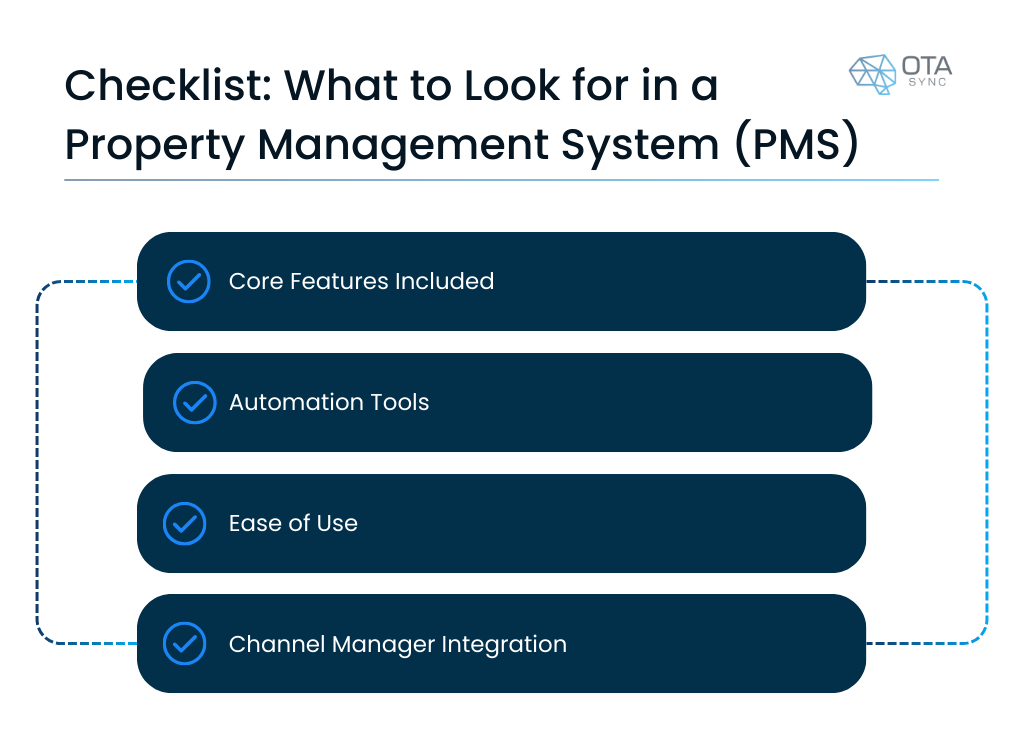
An ideal choice is an all-in-one system that will include all tools, including a PMS. If you have to choose only a Property Management System, it should check these boxes:
- Keeps track of all your bookings, guest info, and payments
- Helps with check-ins, check-outs, and housekeeping
- Works well across all devices (especially mobile)
- Connects seamlessly to your channel manager and booking engine
💡 Expert Tips:
- Choose a PMS that grows with your business — make sure it’s made for managing multiple properties if needed
- Look for one that includes helpful extras like auto-messages, payment tracking, and performance reports
- Ask about customer support — you’ll want quick help when you need it
What to Look For When Choosing a Channel Manager
When evaluating channel management solutions, it’s important to choose a system that fits seamlessly into your overall management software setup. A reliable channel manager should support your property’s growth by efficiently handling connections with multiple online travel agencies (OTAs) and keeping everything aligned across platforms.
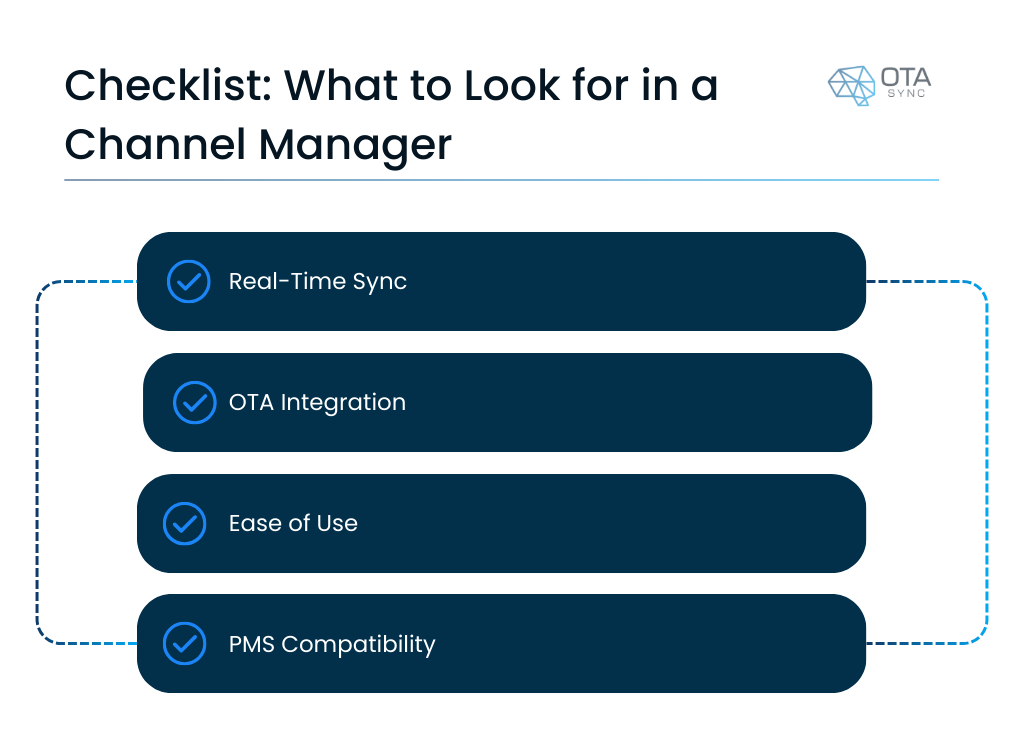
Look for a channel manager that:
- Syncs availability and rates instantly across all channels
- Prevents double bookings and manual entry errors
- Integrates seamlessly with your PMS and booking engine
- Supports two-way communication with OTAs for updates and cancellations
- Offers a clean, easy-to-use dashboard for quick oversight
💡 Expert Tips:
Choose a solution that allows flexible channel management with no limits on the number of OTAs or listings you can connect. Prioritize real-time syncing over batch updates to avoid booking issues.
Ideally, the system should also offer performance analytics by channel, so you can see where your revenue is really coming from. And always check the quality of customer support — when your bookings depend on a channel, fast help is non-negotiable.
FAQ about PMS Channel Manager
What’s the Difference Between a CMS and a PMS in Hospitality?
A PMS (Property Management System) handles daily hotel operations like reservations, payments, check-ins, and guest info. A CMS (Content Management System) manages website content. They serve completely different purposes — PMS is for operations, CMS is for web content.
Is a Channel Manager the Same as a PMS?
No. A channel manager connects your property to multiple booking platforms (like Booking.com or Airbnb), syncing availability and rates. A PMS manages internal tasks like guest records, housekeeping, and check-ins. Together, they simplify property management but serve different functions.
What is Channel Management in the Hotel Industry?
Channel management is the process of controlling and updating your property’s listings across OTAs, booking engines, and other platforms. It ensures your room availability, rates, and restrictions are consistent in real time — preventing overbookings and boosting revenue.
Do I Really Need a Channel Manager for My Property?
If you list rooms on more than one OTA (like Airbnb or Expedia), a channel manager is almost essential. It saves time, prevents booking errors, and helps you grow without manual work. For most property managers, it’s a must-have part of their management software stack.
Do I need a channel manager for Airbnb listings?
If Airbnb is your only platform, you might not. But if you use multiple booking platforms or a direct site, a channel manager is key. It keeps everything synced and helps prevent double bookings — especially for vacation rentals.
Why the Right Property Management Software and Channel Manager Make All the Difference
Choosing the right management software is key to staying on top of your daily tasks.
A good property management software helps every property manager stay organized, connect with multiple booking platforms, and manage everything through one system.
With the right tools and a channel that fits your needs, managing your property gets a whole lot easier.
🚨Special Offer
Want to stay on top of things and receive special offers and discounts? We’ve got you!
OTA Sync rewards smart hoteliers by giving out special discounts. Sign up now.
Keep Reading
1. The Glamping Business: How To Increase Your Revenue
 English
 Deutsch
 Français
 Hrvatski
 Srpski
 Crnogorski
 Italiano
 Español
 简体中文
简体中文 Magyar
 Português
 Română
 Русский
 Shqip
Shqip Nederlands
 Ελληνικά
 العربية
 Български