
Revenue management is one of the most important drivers of hotel profit in 2026. It is not just about raising or lowering prices. It is about making smart, data-based decisions that help you earn more from the demand you already have.
At its core, revenue management means selling the right room to the right guest at the right time and at the right price. To do this well, a revenue manager uses clear revenue management strategies and strong revenue manager pricing strategies to balance occupancy, rate, and demand.
In this ultimate 2026 guide, you will learn how revenue management really works, which revenue management strategies deliver results today, and how modern revenue manager pricing strategies can help your hotel grow revenue in a steady and predictable way.
2 Beat Overview: What is Hotel Revenue Management
1. Definition
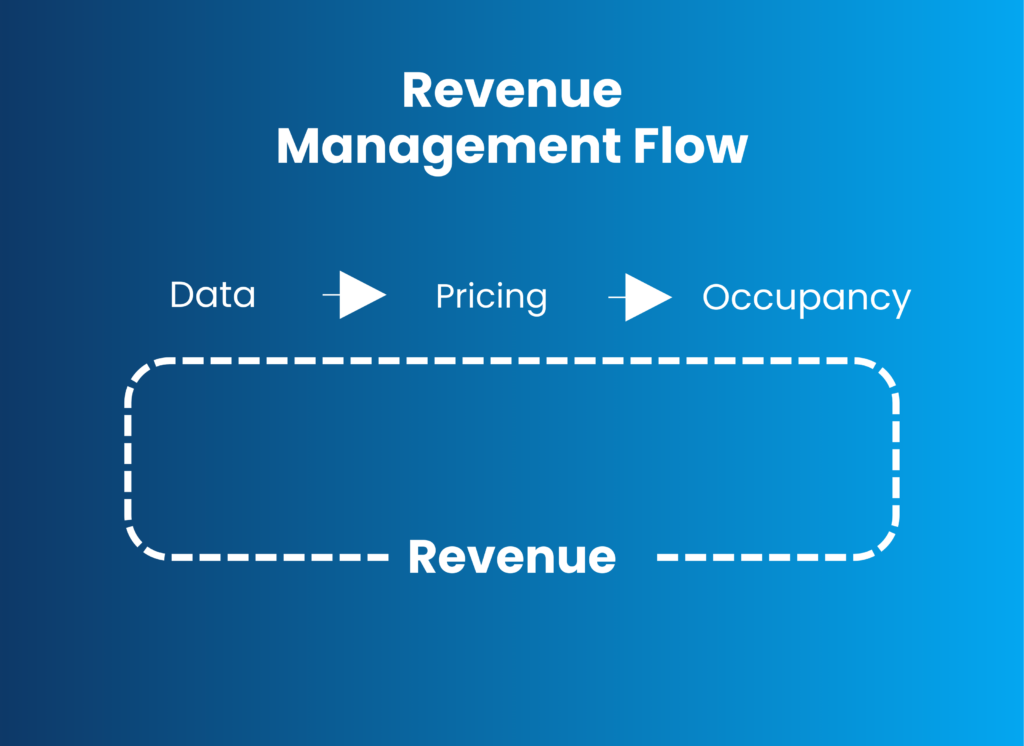
Hotel revenue management involves using data-driven strategies to optimize pricing, occupancy, and revenue, helping hotels earn more while running efficiently.
2. Purpose and Goals
The primary goals are to optimize average daily rate (ADR), increase occupancy, maximize revenue per available room (RevPAR), and improve profitability while maintaining guest satisfaction.
3 Core Principles for a Revenue Manager
1. Demand Forecasting
Demand forecasting in the hospitality industry is the process of predicting how many guests will book rooms in the future. This uses historical data, market trends, seasonal patterns, local events, and current booking behavior to estimate demand.
Accurate forecasts help hotels plan pricing, manage inventory, and make informed decisions about staffing, promotions, and special offers. By understanding when demand is likely to rise or fall, hospitality businesses can optimize revenue, reduce empty rooms, and improve overall profitability.
2. Dynamic Pricing
Dynamic pricing is the practice of adjusting room rates in real time based on demand, availability, competitor pricing, and other market signals.
In the hospitality industry, this approach helps hotels respond quickly to changing conditions, ensuring they stay competitive while maximizing total revenue.
By continuously monitoring booking patterns and market trends, hotels can set prices that attract guests during slower periods and capture higher revenue during peak demand, ultimately improving overall profitability and efficiency.
3. Inventory Control
Managing room availability and restrictions (minimum stay, closed to arrival, allotments) to shape demand and maximize revenue.
3 Key Components of Revenue Management Strategies
1. Market Segmentation
Market segmentation in the hospitality industry is the process of dividing customers into distinct groups, such as leisure travelers, business guests, groups, online travel agencies (OTAs), or direct bookers. By understanding these different segments, hotels can tailor pricing, packaging, and distribution strategies to better meet each group’s needs.
For example, leisure travelers might respond well to bundled packages or promotions, while business travelers may prioritize flexible booking options. Proper segmentation also helps hotels optimize the sale of hotel rooms, ensuring the right type of guest fills the right room at the right time. By aligning offers and pricing with specific customer segments, hotels can increase occupancy, improve guest satisfaction, and maximize total revenue.
2. Distribution Management
Distribution management is the practice of balancing different sales channels—such as direct website bookings, OTAs, wholesalers, and corporate accounts—to control costs and maximize net revenue.
By carefully managing where and how hotel rooms are sold, hotels can reduce high commission fees from third-party channels while encouraging more direct bookings. This strategy helps increase revenue by capturing higher profit margins and ensuring rooms are sold through the most effective channels.
Key actions in distribution management include:
- Monitoring performance across all sales channels
- Adjusting availability and allocations for each channel
- Optimizing pricing for different distribution sources
- Encouraging direct bookings to reduce commission costs
Effective distribution management ensures hotels fill rooms efficiently, stay competitive, and boost overall profitability.
3. Rate Fencing and Packaging
Creating rate rules, non-refundable offers, and packages to protect higher-yield channels and appeal to different customer needs.
Metrics and KPIs
Tracking the right metrics and KPIs is essential for effective yield management and maximizing room revenue in the hospitality industry. These numbers give insight into how well a hotel is performing and guide decisions in hotel operations.
RevPAR: What is RevPAR?
Revenue per Available Room (RevPAR) combines occupancy and ADR to measure overall room revenue performance. This core metric helps hotels understand how effectively they are selling available rooms and is a cornerstone of yield management.
ADR and Occupancy
Average Daily Rate (ADR) tracks pricing, while occupancy measures how many rooms are sold. Together, these metrics provide a clear picture of pricing effectiveness and hotel operations efficiency. Monitoring ADR and occupancy helps hotels adjust rates, forecast demand, and implement smarter revenue management strategies.
Other KPIs
Other important KPIs give a more complete view of hotel performance, including:
- GOPPAR (Gross Operating Profit per Available Room): Measures profitability per room, beyond just revenue.
- Average Length of Stay (ALOS): Tracks guest stay duration to optimize pricing and occupancy.
- Booking Window: Shows how far in advance guests are booking, helping with yield management decisions.
- Cancellation Rate: Monitors lost revenue from cancellations and informs flexible policies.
- Channel Mix: Tracks which sales channels are performing best, helping balance costs and increase room revenue.
By tracking these metrics and KPIs, hotels can make informed decisions, improve hotel operations, and implement effective yield management strategies that drive revenue and profitability.
Tools and Technology
Property Management Systems (PMS)
A Property Management System (PMS) centralizes reservations, guest profiles, billing, and other operational data that hotel teams rely on. By keeping all critical information in one place, a PMS allows revenue managers to make faster, more informed decisions and identify new revenue opportunities in the hotel business.
💡Shining the Spotlight
HotelSync is an all-in-one cloud platform for hotel management, and HotelSync PMS is its core property management module. It centralizes reservations, guest profiles, billing, and operations, while integrating with leading revenue management tools to help hotels track room availability, optimize pricing, and uncover new revenue opportunities.
Revenue Management Systems (RMS)
Revenue Management Systems (RMS) analyze historical and real-time data, generate accurate forecasts, and recommend optimal pricing and inventory controls.
RMS tools work alongside a PMS to help hotels maximize room revenue and make smarter decisions in the hotel business.
Business Intelligence and PMS Integrations
Integrating a PMS with business intelligence (BI) dashboards, channel managers, and central reservation systems (CRS) enables real-time reporting and decision-making.
These integrations give hotels a full view of their operations, uncover new revenue opportunities, and streamline hotel management tasks, ensuring faster, data-driven responses to market changes.
Strategies and Tactics
Effective hotel revenue management strategies rely on a mix of pricing controls, restrictions, and promotions to maximize revenue while maintaining guest satisfaction.
Length-of-Stay Controls
Length-of-stay (LOS) controls help hotels manage high-demand periods by applying minimum or maximum stay rules. This ensures high-value nights are protected, and demand curves are smoothed.
Key LOS actions include:
- Minimum stay rules: Require guests to book a certain number of nights during peak periods.
- Maximum stay rules: Limit long bookings that could block revenue opportunities from other guests.
- Flexible LOS management: Adjust rules dynamically based on occupancy forecasts and market trends.
💡Shining the Spotlight
In HotelSync, hotel managers and revenue managers can easily create minimum or maximum stay restrictions and make them flexible based on demand. Because HotelSync is an all-in-one platform, these restrictions can be applied directly through the hotel’s booking engine, helping to:
- Optimize hotel revenue management strategies
- Maintain guest satisfaction and encourage positive reviews
- Reduce dependency on OTAs and avoid high commission costs
With HotelSync, LOS controls become a seamless part of daily operations, turning rules into real revenue opportunities.
Closed to Arrival/Departure
CTA (Closed to Arrival) and CTD (Closed to Departure) restrictions prevent low-value, one-night bookings that could reduce potential revenue on high-demand dates.
How revenue managers use CTA/CTD:
- CTA: Prevents guests from starting a stay on peak nights.
- CTD: Prevents guests from ending a stay on high-value nights.
- Dynamic restrictions: Adjust restrictions in real time based on forecasts and booking patterns.
Promotions and Discounts
Targeted promotions and limited-time discounts help stimulate demand during off-peak periods without eroding rate integrity.
Effective tactics include:
- Segmented promotions: Offer deals to leisure travelers, groups, or OTA channels strategically.
- Short-term offers: Create urgency with limited-time discounts.
- Package deals: Combine rooms with meals or experiences to increase value perception.
- Rate integrity focus: Ensure discounts do not undercut standard pricing during high-demand periods.
By combining LOS controls, CTA/CTD restrictions, and smart promotions, revenue managers must implement hotel revenue management strategies that maximize occupancy, protect high-value nights, and drive overall profitability in independent hotels.
3 Implementation Steps
Putting hotel revenue management strategies into action requires a clear process. These three steps help allow hotels to unlock their full revenue potential while maintaining efficient inventory management.
1. Data Collection and Clean-Up
Start by consolidating historical bookings, rates, channel performance, and market data.
Clean, accurate data forms the foundation for reliable forecasts, helping revenue managers make informed decisions and spot opportunities to maximize room revenue.
2. Set Rules and Processes
Define key rules for segmentation, rate structures, approval workflows, and reporting.
Clear processes ensure consistent execution, simplify inventory management, and guide revenue managers in applying the right strategies at the right time.
3. Monitor, Test, and Adjust
Revenue management is not set-and-forget. Continuously review performance, test pricing or distribution strategies, and refine your models.
Small adjustments can uncover hidden revenue potential and ensure your hotel adapts to changing market conditions.
3 Common Challenges
Even well‑designed hotel revenue management strategies face obstacles that can limit revenue growth and reduce gains in total revenue per available room. Recognizing these common challenges and knowing how to respond helps revenue teams improve performance and achieve successful revenue management.
1. Data Quality
Inaccurate or fragmented data makes it hard to generate reliable forecasts and solid pricing decisions. According to market research, hotels that integrate revenue management with CRM and direct booking engines see direct booking conversions improve by up to 20% while reducing dependency on high‑commission channels, highlighting the value of good data across systems.
What to do: Centralize and clean historical data from reservations, rate history, and channel performance. Use integrated systems to ensure all data flows into forecasting and pricing tools so revenue managers can make decisions based on the most accurate picture available.
2. Distribution Complexity
Managing multiple sales channels with different commission structures and policies remains a top concern for independent hotels and other properties. Around 50% of global hotel booking revenue is captured by online travel agencies (OTAs), showing how much influence these channels have and why balancing them is critical for maximizing total revenue per available room.
What to do: Streamline channel oversight with channel managers and direct booking incentives to reduce reliance on costly commissions. Track performance and inventory in one platform to improve pricing strategy and drive more profitable bookings.
3. Organizational Buy-In
Revenue management cannot succeed without cooperation across departments. Front‑desk staff, sales, marketing, and finance teams all affect pricing execution, guest experience, and operational efficiency. Training and clear processes help align teams around shared goals like occupancy, ADR, and total revenue per available room.
What to do: Establish clear workflows and communications so each department understands its role in revenue strategy. Regular reporting and shared performance goals help make revenue management a collaborative, results‑oriented effort.
Trends and Future Directions
The future of effective revenue management in the hotel industry is shaped by technology, guest expectations, and evolving business models. Staying ahead of these trends allows hotels to unlock new revenue streams and make smarter decisions with modern management software.
AI and Machine Learning
Advanced AI and machine learning algorithms are transforming how hotels forecast demand, set dynamic pricing, and personalize guest experiences at scale. Key benefits include:
- Smarter forecasts: Predict occupancy and booking trends with higher accuracy
- Dynamic pricing: Adjust rates in real time based on market conditions, competitor activity, and historical demand
- Operational efficiency: Automate repetitive revenue tasks so revenue managers can focus on strategy
Personalization and Guest Value
Hotels are moving beyond purely price-driven tactics to focus on personalized offers that increase lifetime guest value. Effective personalization strategies help build loyalty and maximize revenue streams by:
- Offering tailored packages based on guest preferences or booking history
- Encouraging upsells such as room upgrades, experiences, or add-ons
- Strengthening direct bookings through loyalty programs and exclusive deals
Sustainability and Ancillary Revenue
Sustainability and additional services are increasingly part of effective revenue management. Hotels can boost revenue streams by:
- Incorporating eco-friendly initiatives that appeal to conscious travelers
- Monetizing ancillary services like spas, F&B, excursions, or experiences
- Using management software to track and optimize both room and ancillary revenue
By embracing AI, personalization, and sustainability strategies, hotels can optimize every revenue stream, improve guest satisfaction, and make effective revenue management a core part of long-term success.
Frequently Asked Questions
Is revenue management only about raising prices?
No. It focuses on selling the right product to the right customer at the right time and price, balancing rate and occupancy to maximize overall profit.
Can small hotels benefit from revenue management?
Yes. Even small properties can improve profitability by applying basic forecasting, segmentation, and channel strategies.
How do I measure success?
Track RevPAR, ADR, occupancy, GOPPAR, and channel profitability over time and compare against competitive sets and historical baselines.
How HotelSync Can Help
Effective hotel revenue management requires accurate data, strong distribution control, and the ability to adjust pricing and inventory quickly. HotelSync brings these capabilities together in one place, helping hotels simplify operations while identifying new revenue opportunities.
The HotelSync all-in-one platform combines essential tools such as:
- Property Management System (PMS) to centralize reservations, guest profiles, and operational data
- Channel Manager to control room distribution across OTAs and other booking channels
- Booking Engine to drive more direct reservations and reduce commission costs
- Payments to streamline transactions and improve the guest booking experience
- Guest App to enhance communication and support upselling opportunities
- Multi-property Engine for managing multiple hotels from a single dashboard
By connecting these systems, HotelSync gives revenue managers a clearer view of room availability, booking trends, and channel performance. This allows hotels to adjust pricing, manage inventory more effectively, and capture more profitable bookings.
Because the platform is cloud-based, hotel teams can manage operations from any device, automate daily tasks, and make faster revenue decisions. Hotels can migrate from their existing system and be fully onboarded in under a day with secure data transfer and 24/7 live support.
Trusted by 5,000+ properties, HotelSync provides a scalable platform that helps hotels streamline operations while supporting smarter revenue management.
 English
 Deutsch
 Français
 Hrvatski
 Srpski
 Crnogorski
 Italiano
 Español
 简体中文
简体中文 Magyar
 Português
 Română
 Русский
 Shqip
Shqip Nederlands
 Ελληνικά
 العربية
 Български