
If you go to an independent hotel today, you might notice something different from what you would have five years ago. The front desk still greets you with a smile, and the lobby still has that special charm that only smaller hotels can offer. But a lot has changed behind the scenes.
According to Hospitality Technology, more than 70% of hotels in 2025 are investing in hotel automation to improve efficiency and create smoother operations. The hum of automation is quietly changing the way these hotels work, making things easier for travelers and better for owners in the long run.
The rise of automation isn’t about replacing the warmth of people with cold technology for independent hoteliers. It’s about giving staff the time and space they need to do what they do best: provide hospitality that feels real, personal, and memorable. In fact, the right tools can completely transform how a hotel operates, blending efficiency with genuine service. If you want to know more about creating personalized service for your guests, we have more blogs on that!
Let’s dive into how you can automate your hotel operations.
From Manual Strain to Seamless Operations
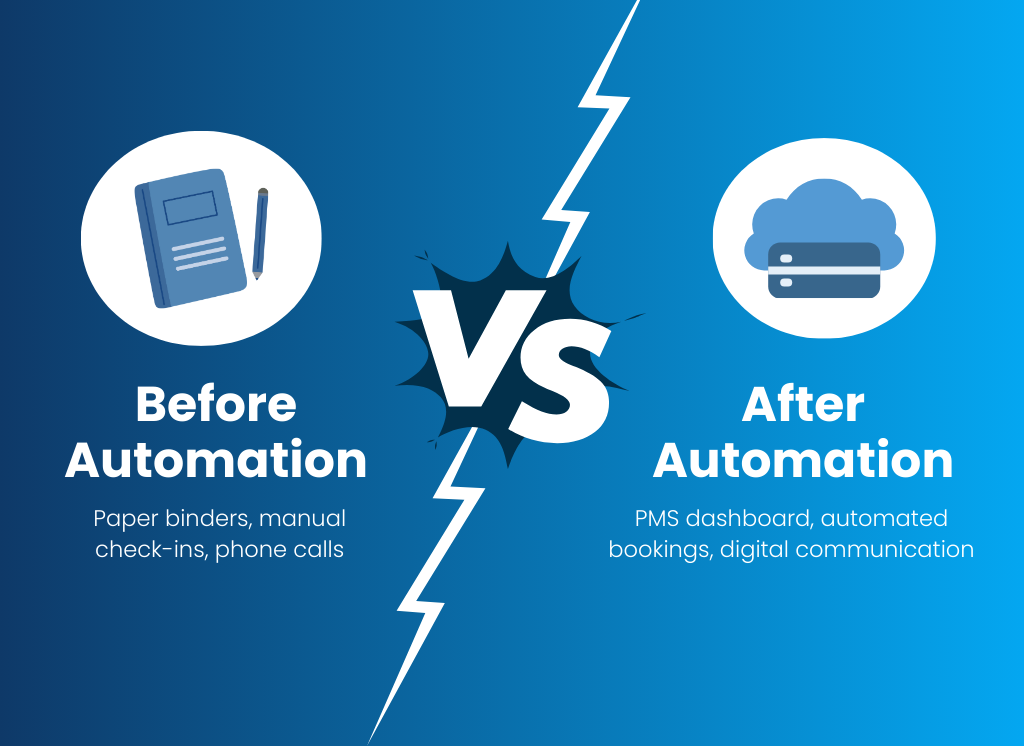
Independent properties usually have small teams that work together. That means that the people at the front desk might have to handle check-ins, phone calls, coordinating housekeeping, and requests from guests who arrive late at night, all in the same shift. In the past, a lot of this work was done on paper or by hand. For example, people used binders to keep track of reservations, wrote down housekeeping lists by hand, or went back to the office computer late at night to confirm a booking.
Automation has quietly gotten rid of a lot of these problems. Cloud-based property management systems (PMS) and Channel Managers now keep track of room availability across all booking sites in real time, so there are no double bookings.
Mobile apps automatically set up cleaning schedules and let teams know right away when a room is ready for the next guest.
Even simple automations, like sending digital keys through a smartphone app, make check-in faster and less crowded at the front desk. For many independent hotels, adopting these tools is the first step toward becoming a smart hotel that balances personal service with efficiency.
💡Shining the Spotlight
HotelSync’s PMS makes this transition even easier. With an intuitive cloud-based system, independent hotels can manage reservations, housekeeping, and communication all in one place. The platform offers free onboarding and 24/7 customer support, giving small teams the confidence to focus on service rather than juggling multiple tools. By centralizing daily operations, HotelSync helps transform independent hotels into efficient, future-ready properties without losing the personal touch that makes them unique.
Elevating the Guest Experience Through Personalization
For travelers, a stay at an independent property is rarely about convenience alone—it’s about the character, the human touch, and the stories that come with it. Ironically, by managing the transactional, repetitive tasks that frequently divert employees from real-world interactions, automation helps bring out more of that charm.
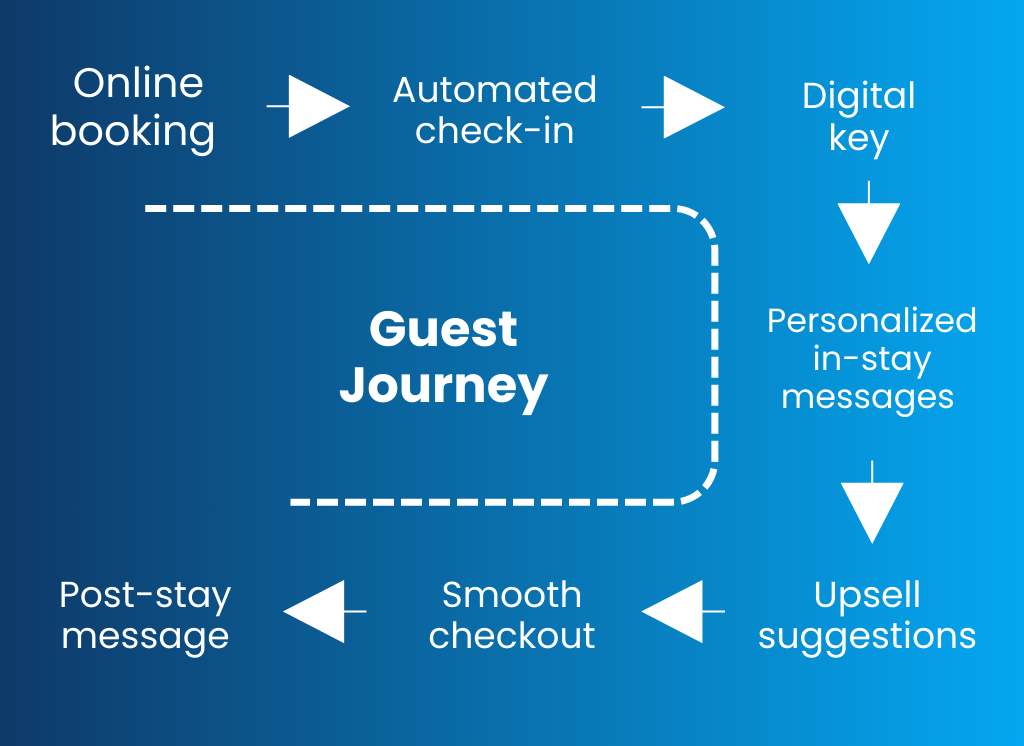
Consider communication with guests. Hotels are now able to send customized notes prior to arrival through automated messaging platforms (“We are so excited to have you here, Anna!”), reminders during the stay (“Breakfast is served until 10 a.m.—try the new local honey on the menu!”), thank-you notes upon departure, and even personal touches such as “Your favorite corner suite is ready.”
Although the backbone is automated, these touchpoints feel deliberate and individualized. Staff members are free to provide small extras in person rather than being overburdened with administrative tasks. This shift not only saves time but also helps improve guest satisfaction, since employees can focus on genuine connections like recommending nearby eateries or surprising a loyal traveler with an upgrade.
💡Shining the Spotlight
HotelSync’s Guest App is designed to bring these personal touches into the digital era. The app allows hotels to send automated but personalized messages, share real-time updates, and offer convenient features like digital keys or in-app requests. By centralizing communication in one easy-to-use platform, the Guest App helps hotels build stronger relationships, improve guest satisfaction, and create experiences that feel seamless yet personal.
To check out real-world examples of this for yourself, watch our customer success video below.
Streamlining International Travel Complexities
Eliminating friction points that frequently arise before a guest even enters the hotel is one of the most significant advantages automation provides. For many international travelers, the ability to secure Schengen visa appointments in advance is just as important as booking flights or hotels, and automation tools can help reduce the stress of coordinating these steps. From real-time booking engines to platforms that assist travelers in securing appointments for Schengen visas in advance, independent properties are increasingly implementing tools that streamline the experience of their foreign guests.
Coordinating travel dates, obtaining visas, and organizing paperwork can be logistically challenging for many foreign visitors. Hotels are providing more than just a room when they integrate with systems that streamline this process; they are giving peace of mind. For example, a Prague boutique hotel may collaborate with a digital concierge service that helps visitors with local visa requirements, connects them to scheduling platforms directly, and links reservation dates to travel documents.
By offering specialized assistance that appeals to foreign visitors, this kind of progressive strategy enables smaller hotels to compete with large chains. After all, these added touches don’t just reduce stress—they also improve guest experiences, making it more likely that a positive review after departure reflects the ease of the entire trip, not just the stay itself.
Revenue Growth Without the Guesswork
Automation has a quantifiable effect on a hotel’s financial performance in addition to the visitor experience. When it comes to pricing strategy, independent properties have historically depended on gut feeling, seasonal trends, or even pure luck. Boutique hotels can now use dynamic pricing engines, which were previously only available to large chains, for a much lower price.
In order to automatically modify rates in real time, these tools examine demand, regional events, rival pricing, and historical data. This implies that a small seaside inn can offer competitive pricing on slower weekdays and earn more money on busy weekends without having to spend hours manually updating rates.
Similar to this, hotels can recommend extras like wine tastings, guided city tours, or airport transfers at the ideal point in the booking process by integrating upselling platforms into booking engines. In addition to increasing income, this opens up possibilities to improve the visitor’s stay in ways they might not have thought of, and helps empower hotel teams to create more meaningful and profitable experiences.
💡Shining the Spotlight
With Payment Processing, hotels gain a powerful tool that simplifies revenue collection while keeping operations secure and efficient.
Payments are fully integrated with the PMS, allowing transactions, deposits, and refunds to be managed automatically without switching between systems.
This not only reduces errors and saves time but also creates a smoother checkout process that leaves travelers with a positive final impression.
Freeing Staff to Be More Human
The idea that automation makes hospitality seem robotic is among the most pervasive misconceptions about it. The opposite is actually true, particularly for independent hotels. Automation frees up staff time for meaningful connections by handling repetitive tasks like inventory tracking, schedule management, and payment processing.
Consider a visitor who arrives late following a lengthy flight. They have already checked in online and received a digital key on their phone, saving them the trouble of waiting in line for paperwork and credit card processing. Instead of hurrying through administrative duties, the front desk employee can greet travelers warmly, offer a cup of tea, and provide advice on the best local eateries that are still open.
The silent efficiency of automation in the background enables that human moment—the one that travelers remember. And with new AI-powered tools becoming part of hotel operations, these seamless experiences are easier than ever to deliver without losing the personal touch that makes smaller properties so memorable.
Tackling Challenges and Finding Balance
Adopting automation is not without its difficulties, of course. The expenses of new systems, the learning curve for employees, or losing the distinctive “human touch” are common concerns for independent properties.
Balance is the key. Automation should enhance hospitality rather than replace it. The most successful hotels are those that view technology as a partner rather than a substitute. Additionally, training is crucial because adoption goes much more smoothly when employees know how systems lessen their stress rather than increase it.
Selecting tools that complement their brand is also crucial for hoteliers. Although biometric check-in kiosks might not be necessary for a rustic mountain lodge, automated booking confirmations with packing recommendations or weather updates could be very helpful.
Looking Ahead: A Future of Smarter Stays
The expectations of visitors will change as travel continues to change. By adopting automation, independent hotels are positioning themselves not only to endure but also prosper in this new era. They can provide more streamlined operations, individualized experiences, and even assistance with practical travel logistics, such as assisting visitors in scheduling appointments for Schengen visas during the planning stage, by incorporating the appropriate tools.
Automation’s ability to grow with each property’s vision is its greatest feature. Some people might only need to digitize their housekeeping schedules. For others, it could entail a completely integrated experience that starts as soon as a visitor clicks “book now,” continues through their stay in hotel rooms designed for comfort and efficiency, and lasts smoothly for a long time after they’ve checked out.
In conclusion
The goal of automation is to preserve the essence of hospitality, not to eradicate it. Automation works in the background to ensure that the details go smoothly so that the human connections can be highlighted in independent hotels, where each stay is intended to feel special and individual.
The advantages are real and long-lasting, whether it’s making sure employees have more time for meaningful interactions, assisting foreign visitors with complicated visa requirements, or optimizing revenue opportunities through more intelligent pricing. These innovations are helping small properties stay competitive and relevant within the broader hospitality industry.
Independent hotels only need to accept technology according to their own rules; they don’t need to be afraid of it. By doing this, they produce something genuinely unique: effective operations, happy customers, and memories that last long after check-out.
How HotelSync Can Help?
Whether you’re running a boutique hotel, full-service resort, or vacation rental complex, HotelSync is built to help you automate, optimize, and maximize revenue while keeping guests at the heart of the experience.
Because of cloud-based technology, costs are drastically reduced, daily tasks are automated, and the overall efficiency and revenues of the property are increased.
The company has over 3.000 satisfied users in 24 countries around the world.
There are four complete solutions for managing hotels and apartments:
🚨Special Offer
Want to stay on top of things and receive special offers and discounts? We’ve got you!
HotelSync rewards smart hoteliers by giving out special discounts.
 English
 Deutsch
 Français
 Hrvatski
 Srpski
 Crnogorski
 Italiano
 Español
 简体中文
简体中文 Magyar
 Português
 Română
 Русский
 Shqip
Shqip Nederlands
 Ελληνικά
 العربية
 Български